
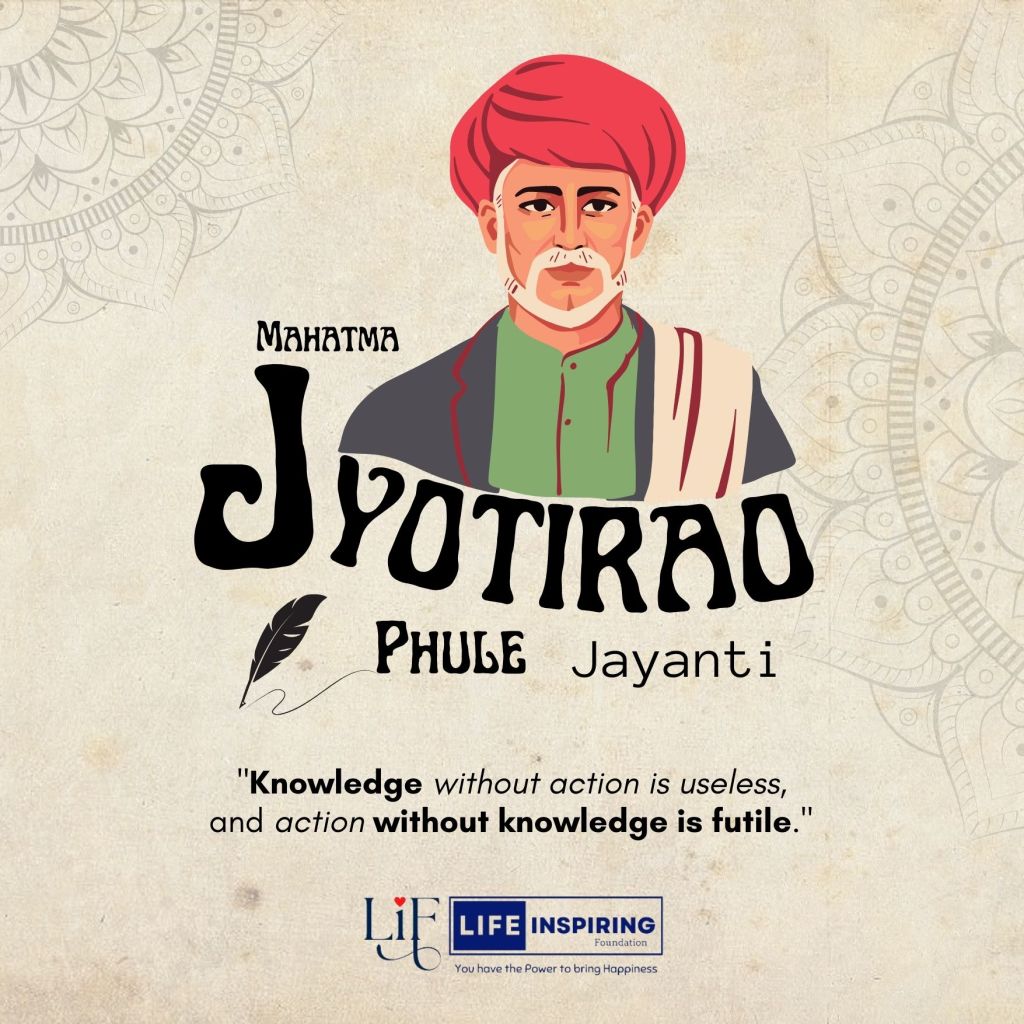
“The development of a country is impossible without the education of its women and oppressed classes.”
These powerful words by Mahatma Jyotirao Govindrao Phule, fondly known as Jyotiba Phule, still echo in the soul of India’s social justice movement. On his birth anniversary, we pay tribute to this towering figure, whose life was dedicated to the emancipation of the oppressed, the upliftment of women, and the eradication of caste-based discrimination.
I. Introduction
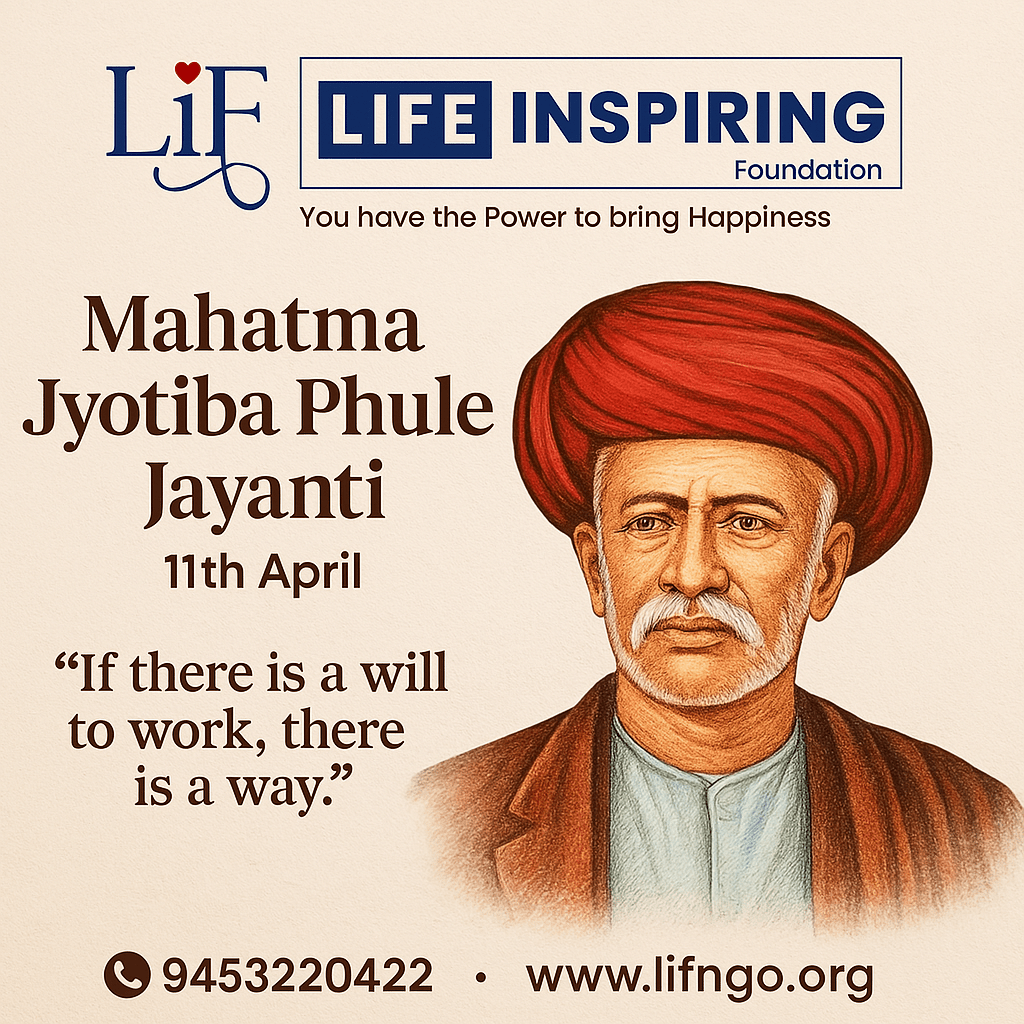
Born on April 11, 1827, in Pune, Maharashtra, Jyotiba Phule emerged as one of India’s first and most courageous social reformers. At a time when orthodoxy and casteism governed every aspect of life, he envisioned an India where education, gender equality, and social justice would form the bedrock of society.
Phule’s legacy is deeply rooted in his fight against Brahmanical dominance, patriarchal oppression, and untouchability. Along with his wife, Savitribai Phule, he became a symbol of resistance against systemic inequality. Their courage, sacrifices, and relentless efforts laid the foundation for modern India’s social reform movements.
II. Early Life and Background
Jyotiba was born into the Mali community, which was considered a “lower” caste by the dominant Brahmanical order. His family was involved in gardening and flower-selling. Despite the caste-based stigma, young Jyotiba showed an early interest in learning. Recognizing his potential, a Christian missionary persuaded his father to allow him to attend school.
Jyotiba was a brilliant student but had to endure constant humiliation and discrimination because of his caste. These early experiences of social exclusion and discrimination ignited a fire in him—a fire to question, resist, and reform the unjust system.
III. Awakening: Inspiration and Purpose
The turning point in Phule’s life came in 1848 when he attended a Brahmin friend’s wedding. Upon discovering that Jyotiba was from a “Shudra” caste, the bridegroom’s family insulted him. This incident left a deep scar but also became the catalyst for his life-long mission. He began studying ancient texts, questioning social norms, and understanding how religion was being misused to oppress the lower castes and women.
He realized that education was the key to empowerment. His goal became crystal clear: to build a society where no one would be denied dignity and rights due to their birth.
IV. Contributions to Education
1. The First School for Girls (1848)
At a time when even upper-caste women were denied education, Phule broke all barriers by establishing India’s first girls’ school in Pune in 1848. But he didn’t stop there—he trained his wife Savitribai Phule, making her the first female teacher in India.
They faced severe backlash. People hurled stones and dung at them. Their family disowned them. Yet, they remained undeterred. Together, the Phules opened multiple schools for girls, Dalits, and children from oppressed communities.
2. Night Schools and Adult Education
Phule also opened night schools for working-class men and adult learners. He believed education should be accessible and inclusive, serving those who were marginalized both by caste and class.
V. Fight Against Caste Discrimination
Jyotiba Phule was one of the first Indian reformers to call out the caste system as a tool of oppression. He argued that the Brahminical scriptures and traditions were used to justify untouchability and slavery. His famous book, “Gulamgiri” (Slavery), published in 1873, compared the caste system to the slavery prevalent in the United States, drawing parallels with the African-American struggle for freedom.
He used rational arguments and a reformist tone to awaken the masses. He declared that God did not create caste; it was man-made and must be abolished.
VI. Women Empowerment and Feminist Vision
Phule was a pioneer feminist thinker in India. Long before the word “feminism” became popular, Phule was advocating for women’s rights, education, and dignity.
He strongly opposed child marriage, Sati, and female infanticide—practices that were rampant during his time. Phule and Savitribai also started a shelter for widows and pregnant rape victims, named the “Balhatya Pratibandhak Griha” (Home for the Prevention of Infanticide). This was a revolutionary step in an era where widows were stigmatized and abused.
He believed that empowering women would lead to the upliftment of the entire society.
VII. Formation of the Satyashodhak Samaj
In 1873, Phule established the Satyashodhak Samaj (Society of Truth Seekers) to promote social equality and challenge caste hierarchy. The Samaj aimed to:
Empower the lower castes and women.
Promote rational thinking and education.
Fight religious orthodoxy.
Celebrate inter-caste marriage and widow remarriage.
The Samaj rejected the priestly class and allowed its own members to perform religious rituals, marriages, and ceremonies—ensuring dignity and autonomy for all.
VIII. Political Vision and Advocacy
Phule was also a visionary political thinker. He advocated for universal suffrage, representation of the backward classes, and economic equality.
In his famous letter to the British government, he demanded free education for all, representation in government jobs, and protection from caste-based exploitation. While some accused him of siding with colonial rulers, Phule’s concern was always with the upliftment of the oppressed. He believed the British, at least theoretically, were more open to reforms than the traditional Indian elite.
IX. Literary Contributions
Phule was a prolific writer and used the power of the pen to spread his ideas. His major works include:
“Gulamgiri” (Slavery) – A scathing critique of caste and religious exploitation.
“Tritiya Ratna” – A play advocating education and equality.
“Shetkaryacha Asud” (Cultivator’s Whipcord) – A bold critique of the exploitation of farmers by landlords and priests.
His writings are sharp, honest, and accessible—aimed at awakening the masses.
X. Personal Sacrifices
Phule’s journey was anything but easy. He and Savitribai were ostracized by their families and the community. They endured threats, abuse, and violence. Their work was ridiculed. But their resilience never wavered.
They sold their own property to fund schools and shelters. They spent their lives living humbly so others could live with dignity. Jyotiba also adopted a child from a widow and raised him as his own—demonstrating his commitment to action, not just words.
XI. Last Years and Legacy
Mahatma Phule passed away on November 28, 1890, but his impact did not fade. His ideas later inspired Dr. B.R. Ambedkar, Periyar E.V. Ramasamy, and many other leaders of social justice.
In recognition of his immense contribution:
He was posthumously awarded the title “Mahatma” (Great Soul).
Several institutions and universities are named after him.
His birth anniversary, April 11, is celebrated across India as Social Justice Day.
XII. Why Phule Matters Today
Even today, inequality, casteism, gender discrimination, and educational disparity plague our society. Phule’s ideas remain relevant, radical, and revolutionary.
His emphasis on:
Education as liberation
Dignity for all human beings
Eradication of caste and patriarchy
Justice through collective action
…is what India still needs to achieve in full.
XIII. Conclusion
Mahatma Jyotiba Phule was more than a reformer—he was a revolutionary with a vision. His courage to stand up against centuries-old systems of oppression, his commitment to the downtrodden, and his belief in the transformative power of education made him a legend.
On his birth anniversary, let us not merely remember him with garlands and speeches. Let us honor his life by:
Advocating for equal education.
Fighting discrimination in all its forms.
Uplifting the marginalized.
Empowering women and girls.
As long as we continue his mission, Mahatma Phule will never die. His spirit lives on in every child who gets to go to school, every woman who claims her rights, and every person who stands against injustice.
Jai Jyoti! Jai Savitri! Jai Bharat!

 Life Inspiring Foundation (LiF NGO)